
Eidetic Memory Person: What It Is and How It Works
This article explains what eidetic memory is, how it differs from photographic memory, whether it is real, and what science currently says about an “Eidetic Memory Person” who appear to possess this rare ability.
Introduction
The idea of a person with an extraordinary memory has fascinated scientists and the general public for decades. Many people wonder whether individuals with near-perfect recall truly exist or whether the concept is mostly myth. When someone searches for the term “eidetic memory person”, they are usually referring to someone who can remember images, text, or experiences with remarkable precision.
This article explains what eidetic memory is, how it differs from photographic memory, whether it is real, and what science currently says about people who appear to possess this rare ability.
What Is an Eidetic Memory Person?
An eidetic memory person is someone who can recall visual information with extremely high detail after seeing it only briefly. The term comes from the Greek word eidos, meaning “form” or “image.”
In practice, this means that when an individual looks at an image, page, or scene for a short time, they may later be able to mentally “see” that image again and describe it with surprising accuracy.
For example, an eidetic memory person might:
-
Recall the layout of a page they read earlier
-
Describe details in a photograph they saw only once
-
Remember visual patterns or positions of objects with precision
However, the ability usually lasts only a short time after seeing the image.
Photographic memory vs Eidetic memory in adults

Eidetic
Involves temporarily recalling visual images with high detail
Most commonly observed in children
The image fades after seconds or minutes

Photographic
A popular concept suggesting perfect, permanent recall
No solid scientific evidence that it exists in humans

How Rare Is Eidetic Memory?
Research suggests that true eidetic memory is very rare, especially in adults.
Some studies estimate that about 2–10% of children show signs of eidetic imagery. However, the ability usually disappears as the brain develops.
Among adults, confirmed cases are extremely uncommon. Scientists believe that as the brain matures, it shifts from visual recall toward more conceptual and language-based memory systems.
Characteristics of an Eidetic Memory Person
Strong visual recall
They can describe images in detail after only brief exposure.
Accurate spatial memory
Positions, shapes, and colors are remembered clearly.
Short-term persistence of images
The mental image can remain visible in the mind for several seconds.
No guarantee of perfect memory
Despite strong visual recall, other types of memory may be average.
Famous cases of Eidetic memory persons
Kim Peek: The most extraordinary human brain ever studied

Kim Peek suffered from savant syndrome and had stored in his brain more than 12,000 books that he could recite from memory.
While in Utah, Peek spent his afternoons at the Salt Lake City Public Library reading books and memorizing phone books, maps, and directories. Thanks to this bibliophilic obsession, he perfected the art of reading to unprecedented levels. To give you an idea, the average person reads a page of a book in about three minutes. But not Kim. Kim took only eight to ten seconds to memorize a complete page and add it to the vast library that was his mind. To do this, according to his father, he would read the right page with his right eye and, simultaneously, the left page with his left.
In this way, it is estimated that he devoured and memorized more than 12,000 books during his lifetime.
Stephen Wiltshire: An Autistic Artist who draws huge cityscapes by memory
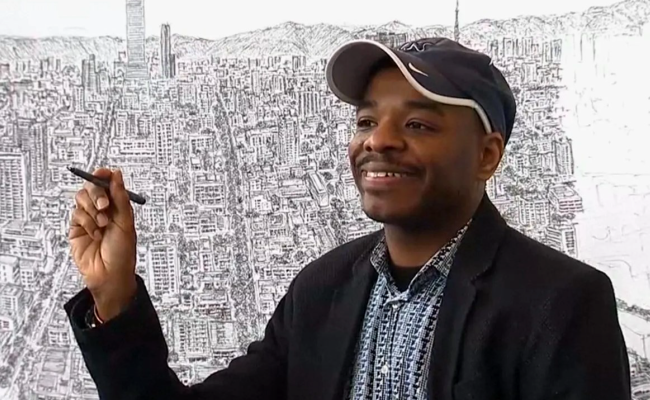
Born 1974 is a renowned British architectural artist diagnosed with autism at age three. Known as a “savant artist,” he possesses a remarkable ability to draw detailed cityscapes from memory after a single observation. Initially mute, he used drawing as his primary form of communication, gaining international fame for his precise, memory-based artistic talent.
In 1989, Wilshire visited Venice and drew his first panorama. From then on, Stephen became known for his incredibly detailed cityscapes, each done from memory with hundreds of streets, landmarks, and other minutia in perfect scale. He drew cities around the world, from Jerusalem to Sydney. His latest project brought Mexico City to life on a 13-foot canvas.
In New York, he took a 20-minute helicopter ride and then sketched everything he saw onto a 19-foot-long piece of paper as viewers watched live via webcam.
The public and the media became fascinated by the young teen’s incredible memory. Stephen was featured on television shows and in documentaries about so-called savants.
Can Someone Develop Eidetic Memory?
There is no scientific evidence that people can fully develop true eidetic memory through training. However, many techniques can significantly improve memory performance, including:
Memory palaces
Visualization techniques
Pattern recognition
Repetition and association
These methods help strengthen the brain’s ability to store and retrieve information, even if they do not create a genuine eidetic memory person.
Brain Training and Memory Improvement
Even if eidetic memory is rare, cognitive abilities can still improve with consistent mental exercise. Activities that challenge the brain help maintain memory, attention, and mental flexibility. Branded Brothers offers you a viarity of games and apps that can help you improve your mental health and memory techniques:




These methods help strengthen the brain’s ability to store and retrieve information, even if they do not create a genuine eidetic memory person.
Conclusion: Is it possible to train for eidetic memory?
The concept of an eidetic memory person is both intriguing and often misunderstood. While some individuals can recall images with remarkable detail for short periods, the idea of a perfect photographic memory remains largely unsupported by science.
Nevertheless, memory is a skill that can be strengthened. Through brain training, puzzles, and memory games, people of all ages can improve their ability to focus, remember information, and keep their minds active.
Even if true eidetic memory is rare, developing stronger cognitive skills is well within reach.